West Coast Modernism: Pacific Coast Luxury meets Italian Know-How
May 5, 2026
An Executive Sanctuary: Designing High-End Director’s Office
March 24, 2026The Evolution of Museum Design: Blending Acoustics, Exhibition Spaces, and Multimedia at the Antoniano Museum in Padua
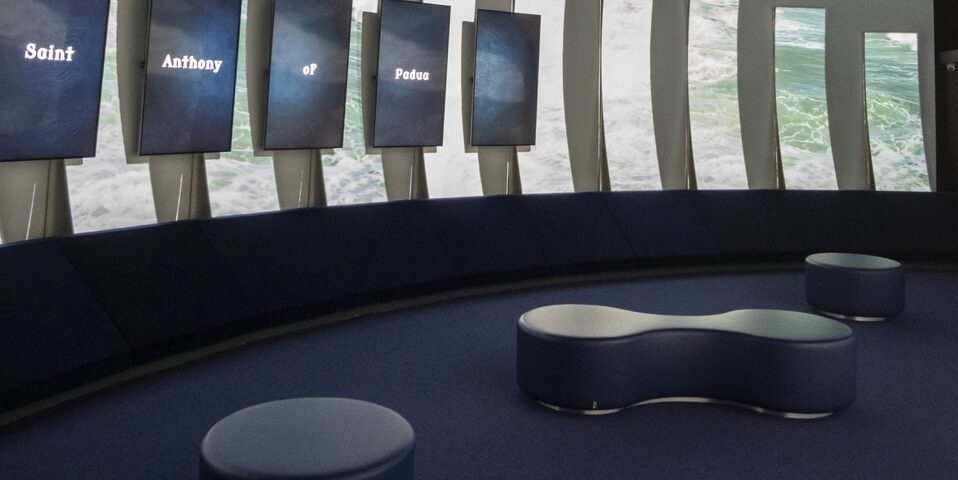
The very concept of a museum has fundamentally changed. Exhibition spaces are no longer designed for passive contemplation; they have evolved into dynamic environments capable of storytelling and engaging all the visitor’s senses. Innovative projects like “Antonius“—the immersive multimedia exhibition dedicated to the life and works of Saint Anthony in Padua, Italy—demonstrate how the success of a modern exhibition largely depends on integrated design, where cutting-edge technology goes hand in hand with environmental comfort and interior solutions.
In a 360° experiential journey guided by soundscapes, projections, and interactive elements, space management requires avant-garde technical solutions to prevent acoustic chaos or rigid layouts from breaking the exhibition’s magic.
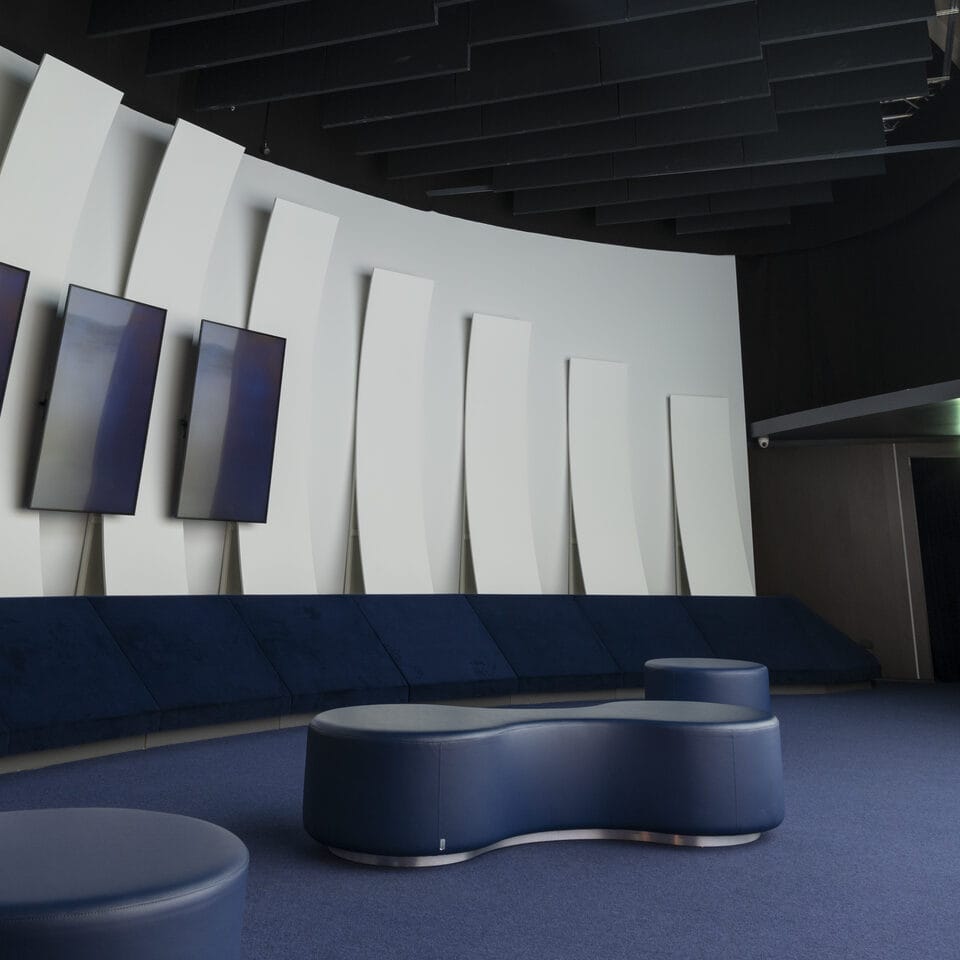
Dynamic Seating for Fluid Spaces: The “Molecola” Modular System
While spatial design cures the atmosphere from above, ground-level furniture defines how the public experiences the space and chooses to pause to process the journey. Within the exhibition path of the Antoniano Museum, the choice of seating fell upon a concept of extreme versatility: the Molecola modular system.
Departing from traditional, rigid museum benches, Molecola introduces a radically new design language:
Organic, Sinuous Shapes: Composed of just four geometric elements inspired by natural curves, this system breaks away from the austerity of traditional exhibition environments, introducing an informal, welcoming, and playful atmosphere.
Infinite Layout Configurations: The core strength of Molecola lies in its modularity. The elements can be seamlessly arranged, separated, and reconfigured with simple movements, adapting effortlessly to visitor traffic and the specific needs of each gallery.
Bespoke Customization: Thanks to a wide range of custom finishes, the seating blends discreetly into the surrounding environment. This offers curators maximum creative freedom while ensuring a pleasant, comfortable rest for visitors.
Design Serving Culture
The Antoniano Museum project in Padua stands as an excellent case study for contemporary museum and contract furniture design. It proves that total immersion is not achieved solely through latest-generation projectors or VR headsets, but by curating invisible details: the harmony of sound and the flexibility of rest.
When industrial design serves culture through modular furniture capable of dialoguing with architecture, the exhibition space ceases to be a mere container and becomes an active part of the narrative.